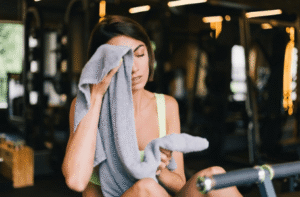
For an active athlete who trains hard, a good towel is a necessity. Constantly dripping in sweat not only creates an uncomfortable and sticky feeling, but it also makes your grip slippery, throwing off your training session. Because of this, keeping a clean towel on hand is essential.
Have you ever thought about choosing a certain towel, or are you the type of person that grabs any towel that you find on the shelf? Guess why choosing a right towel material matters, though it is a small detail but has a big impact on your skin health—helping maintain a clear complexion, minimizing friction, and preventing breakouts. Harsh or low-quality materials can scrape your body, leading to rashes and redness. It’s necessary to select towel material that is suitable for your skin. With so many options out there, it can be overwhelming to figure out what to buy. Let us guide you through the different towel types to find the perfect match for your skin.
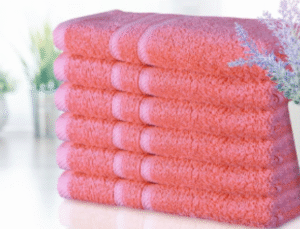
What Are the Material Choice Exists in Towels?
1. Cotton towels:
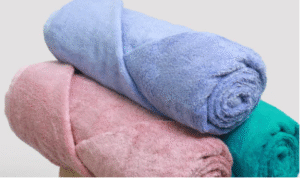
Pros: They are soft and highly breathable, made out of dense and natural (organic) fibers that are soft on the skin. It is exceptionally durable, making it an excellent choice for absorbing heavy sweat.
Cons: Because it absorbs so much moisture, it retains dampness longer. If it doesn’t dry properly, it creates a breeding ground for odor-causing bacteria and germs, which can cause skin irritation.
2. Micro Fiber Towel:
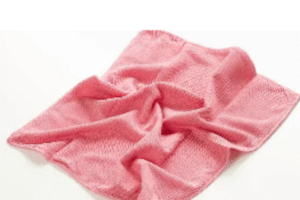
Pros: Lightweight and soft, microfiber is designed from a synthetic blend of polyester and polyamide. Its tiny loops make it compact and highly packable for travel. The structure of the fiber allows it to absorb moisture rapidly, drastically speeding up the drying process.
Cons: Because it is made out of synthetic plastics, it is less eco-friendly. When rubbed aggressively against the body, it can generate a static charge. Additionally, you must avoid using standard fabric softeners when washing microfiber, as they clog the fibers and reduce the potential effect of high absorbency.
3. Bamboo Fiber Towel:
Pros: These towels are extremely soft on the skin, making them ideal for gentle and sensitive skin. Bamboo contains natural antimicrobial properties that help fight off odor-causing bacteria. They are ideal for the gym because they easily soak up heavy sweat and it dries up quickly.
Cons: They are generally more expensive than standard cotton towels. They also require chemical processing to be turned into bamboo viscose/rayon (a semi-synthetic textile), raising environmental concerns. To prevent shrinking, they must be washed in cold water with a mild detergent.
4. Hybrid Blends:
Pros: There are hybrid-blend fabric towels that exist—often combining cotton with microfiber cloth—that are soft, comfortable, durable, and highly convenient for everyday use.
Cons: These blended towels can frequently shed microplastics during laundry cycles and are difficult to recycle. They can feel clingy or static on the damp skin. Synthetic portions do not absorb water as naturally as pure cotton.
5. Linen Towels
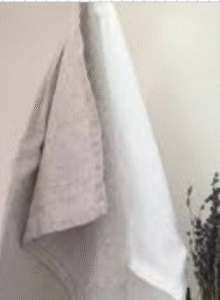
Pros: While they absorb moisture exceptionally well, they lack the immediate plushness of pure cotton. They are highly breathable, absorbs heavy sweat, prossesses natural anti-microbial properties that prevent odor and bacterial growth.
Cons: They feel quite rough initially and require multiple washes to soften up. They do not offer a warm, cozy feeling, making them better suited for hot summer months, and they can be expensive.
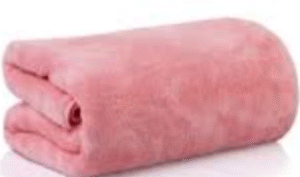
6. Coral fleece:
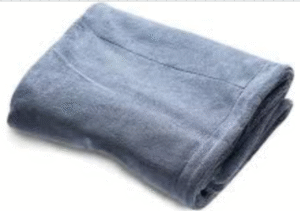
Pros: They are made from a polyester and nylon blend. It is very similar to a microfiber towel, a little rough compared to microfiber. It is a highly affordable alternative to premium microfiber cloths.
Cons: They are prone to shedding; they require strict washing to avoid fabric damage. It is also less absorbent than standard cotton and takes longer to dry.
7. Rayon Towels:
Pros: It is a semi-synthetic fiber derived from the plant cellulose, typically sourced from the wood pulp of plants like pine, bamboo, and eucalyptus. It has good absorbency and anti-static properties. It can also come in tiny compressed towels, which makes them easy to carry and use.
Cons: Some individuals with highly sensitive skin or conditions like eczema may experience allergic reactions, itching, or redness. It is also prone to severe shrinkage if washed incorrectly.
Does Towel Texture Matter? Common Weaves and Patterns Explained
Yes, textures actually matters when choosing towels. A towel’s weave pattern directly dictates its absorbency, drying speed, and skin-friendliness. It tells you everything you need to know about the overall quality of the textile. In fact, two towels with the exact same weight can perform completely differently based on their weave style.
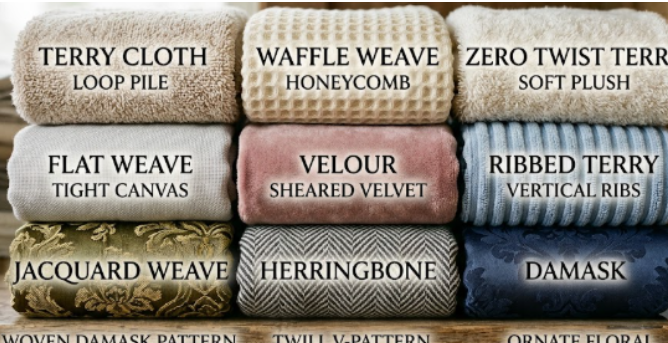
Here are a few woven and textured patterns you can choose from:
1. Terry Cloth:
This is the most common classic towel texture; it has uncut loops of yarn that stand upright on the fabric. Creating a thick and plush feel that maximizes absorbency.
2. Waffle Weave:
Waffle weave has a distinct grid-like pattern, like a waffle; they are tiny and effective, have good absorbency, and have excellent drying speed, making them ideal for humid climates.
3. Zero Twist Terry:
A modern textile technology where premium long-staple cotton fibers are held together without being tightly twisted. This results in an incredibly soft, plush, and highly absorbent towel.
4. Flat Weave:
Flat weaving is commonly seen in traditional Turkish towels; this style features a flat surface completely free of loops. They are lightweight, smooth, and dry significantly faster than terry weaves.
5. Velour:
This is another variation in terry towels where on one side the loops are sheared off, leaving a velvety finish that is soft and plushy. While incredibly soft, this sheared surface makes them slightly less absorbent than standard looped towels.
6. Ribbed Terry:
This weave features a distinct linear, striped pattern that gives it a modern, spa-like aesthetic. The raised ridges are highly effective at lifting dirt and sweat away from the skin.
7. Jacquard:
An advanced weaving technique where patterns are structurally woven directly into the fabric using a specialized loom. This creates a beautifully patterned towel with a dynamic, multi-textured feel.
8. Herringbone:
A classic texture woven into a distinctive V-shaped zig-zag pattern that resembles the skeletal structure of a herring fish.
9. Damask:
Similar to jacquard, damask features intricate, detailed geometric or floral patterns. It is predominantly used for decorative or high-end luxury towels due to its lush, elegant appearance.
What is an Ideal size Towel?
You also need to be familiar with the size to choose the right towel that is compact, quick-drying, and absorbent.
- Face Towel – Perfect for a quick sweat wipe during intense cardio, keeping your face cool during summer training, or draping comfortably around your neck while moving between gym equipment. – You will need to consider a towel with measurements of 12″x12″ to 16″x27″.
- Standard Gym Towel – It is a perfect-sized towel for wiping your hands, arms, and legs; gym equipment; and lying over the bench press. You will need to consider a towel with measurements from 15″x31″ to 16″x27″.
- Full-size towel—This is an effective and efficient towel, especially when you are taking a bath in the shower. It will help you wipe up the whole body, offering full-body coverage. You will need to consider a towel with measurements of 27″x54″.
Note: The weight of the towel matters too—grams per square meter (GSM) is used to measure towel density and weight.
300-400 GSM: lightweight, compact, easy to carry, and ideal for traveling.
450-600 GSM: It offers a balanced feel of comfort, softness, good absorbency, and quick drying.
650+ GSM: It’s very plush and bulky, best for post-bath. It’s difficult to carry and not ideal for the gym, as it takes time to dry.
Are Wrist Towels the Ultimate Gym Hack?
If you live an active life and are passionate about the gym, then this hack might help you mid-set of your gym session when you start sweating excessively. When your forehead is dripping with sweat, you naturally reach to wipe it away with your sleeves. Enter wrist towels—handy, easy to carry, and wearable on your wrists. But can these compact accessories truly replace a standard gym towel? How effective are they during an intense workout? Let’s dive into it to see if wrist towels deserve a permanent spot in your gym bag.
How Effective Wrist Towel is For Gym Training?
Wrist towels are highly effective. Made from materials very similar to standard gym towels (such as microfiber, zero-twist terry, or standard cotton), they easily soak up sweat dripping down your forehead while you’re training. Using them is also a hygienic way to wipe your face, especially when your regular gym towel is being used on the bench press to act as a sanitary barrier between you and the leather. Additionally, they can be used to wipe away any sweaty residue left on gym equipment.
Final verdict:
Yes, they are a smart choice for gym enthusiasts who are looking to protect their skin barrier while maintaining absolute focus. However, they are not always as effective as a regular gym towel. While a standard gym towel easily soaks up heavy sweat from intense training blocks, a small wrist towel can quickly saturate and fail to absorb high volumes of moisture.
Key Features and Tips to care for Your Towels
- Rather than hanging your wet towel on the hook, try air drying via machine or allow it to air dry under the sun.
- Use towels that are built with odor-resistance technology.
- Make sure the towels are made with double stitching to give a soft feel with every wipe and can withstand frequent washing.
- Avoid frequently using fabric softeners; it reduces the ability to absorb moisture.
- Use normal water (not warm, not too hot) while washing clothes; it helps clean away sweat and dirt effectively.
Final Words:
We have covered entire information about towels, but ultimately, the best gym towel purely depends on your priorities. If you sweat heavily, you can opt for a microfiber towel, and if your skin is extra, extra sensitive like mine, then opt for a bamboo towel. For those who prefer classic plush and environmentally safe, opt for pure cotton.
Investing a little thought into your towel is a massive win for your long-term skin health and hygiene.
If you found this guide helpful, feel free to share it with your training partners! Drop a comment below with your favorite type of workout gear, and stay tuned for more athletic skincare deep-dives.
Referred: