
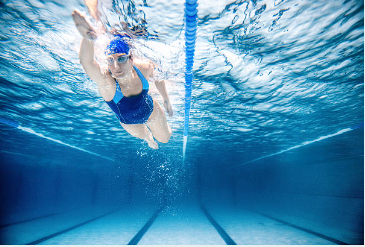
Swimming is not only good for your muscles but also for your mind. It helps improve full-body strength, tones the arms, core, and legs, and significantly improves cardiovascular health.
Chlorine is a bleach used as a disinfectant in water tanks and heavily used in swimming pools. Most swimmers don’t even realize how chlorine can damage their hair. Because chlorine is chemically designed to bond with protein, and your hair is composed of keratin protein, it creates a film-like bond with protein that cannot be easily broken by a standard soap. In other words, chlorine does not sit on the surface; it penetrates the hair shaft, disrupting the internal structure and leading to long-term damage.
The Other Damage Chlorine Does to Your Hair or Scalp
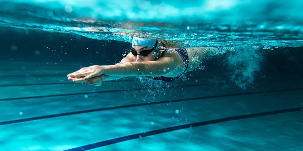
- Structural Damage: Chlorine can oxidize and can damage keratin protein.
- Cuticle Damage: It removes the protective lipid layer and makes the hair porous and brittle.
- Color Fading: Chlorine can cause discoloration in bleached or blond hair, turning it greenish, due to copper oxidation.
- Scalp Irritation: Chlorine water can strip natural oil from the scalp, making it dry, itchy, and irritated.
- Flare-Ups: For those with sensitive skin conditions, chlorine can act as a trigger for eczema, psoriasis, or rosacea, leading to inflammation and flare-ups.
- Acne: If you are dealing with acne, chlorine can clog pores and worsen the skin barrier or can trigger fungal acne due to disruption of the skin’s natural microbiome.
Comparative Stats for Effect of Chlorine on Hair:
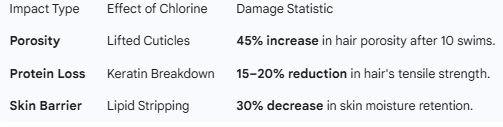
Fig: Comparative stats for chlorine effect on swimmers’ hair
How Can Swimmers Reverse Chlorine Damage to Their Hair?
Rinse your Hair:
Before entering the swimming pool, rinse your hair with fresh water. Your hair acts like a sponge—once your hair has soaked up the fresh water, it reaches its saturation point and cannot absorb as much chlorinated water.
Clarifying Shampoo:
To remove chlorine build-up, you can use clarifying shampoo containing agents like ethylenediaminetetraacetic acid (EDTA) and sodium citrate. These ingredients bond to minerals and chemicals to wash them away. Some of the best chlorine-removal shampoos are as follows:
- ION Swimmer’s Shampoo
- Pattern by Tracee Ellis Ross Clarifying Shampoo
- Ouai Detox Shampoo
- Triswim Shampoo
- Davines Solu Shampoo
- Anomaly Shampoo
Though clarifying shampoo can help in some ways, it depends on how clean your body and hair are and their texture. If your hair and scalp are clean and your hair texture is silky, then you can remove chlorine buildup with just shampoo. Otherwise, you need vitamin C in your haircare supplies—shampoo, spray, hair mask, etc.
Technically speaking, vitamin C doesn’t actually neutralize in the sense of changing pH. It’s just a redox chemical reaction that converts harsh chlorine into a less harmful form.
C5H5O5CH2OH + HOCL → C5H3O5CH2OH + HCl + H2O
(Ascorbic acid + Hypochlorous acid → Dehydroascorbic acid + Hydrochloric acid + water)
Ascorbic acid and sodium ascorbate are forms of vitamin C with different acidities and absorptions. Ascorbic acid has a pH level of 3.0 (acidic), and sodium ascorbate has a neutral pH of 7.0. Avoid using ascorbic acid during summer, as it will be like a mild acid peel every time you use it. Instead, you use sodium ascorbate. It won’t dry out or accidentally burn your skin, eyes, or hair.
DIY- Make your Own Vitamin C Spray For Chlorine to Neutralize
Use 1 teaspoon of sodium ascorbate powder, add 2 cups of distilled water, and add a few drops of jojoba oil to it. Mix it well, then pour that into the spray water bottle.
How to Use It Correctly:
- Rinse your hair with fresh water before entering the swimming pool.
- Use the DIY spray after you exit the swimming pool, and spray it on your damp hair.
- Wait for the spray to neutralize the chlorine in your hair.
- Now take a shower and use a gentle sulfate-free shampoo to remove the neutralized chlorine from your hair.
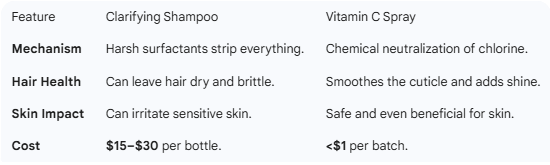
Fig: Clarifying Shampoo VS Vitamin C Spray—This image is taken from the AI and study
For People Wearing Swimming Caps:
Even with the cap/other gear, some of the chlorine water can get into the cap, making it brittle and damaged. To deal with it, rinse your hair with fresh water and spray the vitamin C spray with sodium ascorbate.
Apply Deep Conditioner:
Swimmers’ hair is very brittle and fragile; in other words, they lack moisture/nourishment. Use conditioning treatment with ingredients like shea butter, coconut oil, aloe vera, etc.
- Hydrolyzed Proteins—for building the protein bonds in the hair.
- Shea butter—for providing moisture or nourishment
- Aloe Vera—for nourishment and scalp irritation.
Massage Your Scalp with Oils:
Oils help in providing nourishment to the scalp and hair.
- Argan Oil: Provides softness, moisture, and shine
- Coconut oil provides deep nourishment.
- Jojoba Oil: Promotes nourishment and hair growth.
Avoid Using Any Heating Products:
Avoid using any heating tools like blow dryers, straighteners, and curlers rods on your hair.
Avoid Coloring Your Hair:
It’s better to completely avoid any kind of hair color bleaching or using a box dye. It can further dry your hair and cause damage to your hair beyond repair. Additionally, it can burn your scalp and can lead to irritation.
Trim Your Damaged Hair/Split Ends:
Split ends can get worse with the chlorine exposure. Also, for healthy hair growth, trim your ends every 6 months for healthy hair growth.
Final Thoughts:
A swimmer’s hair is more prone to chlorine exposure, which can be damaging to the body and hair. Hence, protecting it becomes important. As we know, regular shampoo is often insufficient to break the chemical bond of chlorine; hence, it is recommended that you use vitamin C, i.e., sodium ascorbate spray, for chemical reduction of chlorine.
If you find this article useful, then share it with friends and colleagues. Stay tuned to read such interesting articles.
Related Articles