Is Gym Acne Actually Fungal?

How to Tell the Difference Between Gym Acne and Fungal Acne? & Why Your Regular Moisturizer Might Be Making It Worse?

gym

Fitness and active sports are the gateway to a healthy life. Staying fit has a lot of upside—blood circulation, the mind and body stay healthy, and you feel fresh and active the entire day. However, we cannot ignore the downside that comes along—specifically post-workout breakouts and fungal infections. In this article, we will discuss how to differentiate between gym acne and fungal acne, as well as effective ways to prevent it.

Gym and fungal acne are both very common among athletes, yet they are very different from each other. Gym acne (acne mechanica) is caused by pores clogged through friction and sweat, and fungal acne (malassezia folliculitis) is caused by a yeast infection within the hair follicles. 

According to a study, 21% of professionals suffer from acne mechanica, while 10% to 15% of professional athletes experience Malassezia folliculitis. Most people fail to distinguish between the two, which can impact the treatment. Let’s explore the key difference between gym acne and fungal acne for the right approach for your skin and treatment. 

What is Gym Acne?

Acne mechanica is a type of acne triggered by friction, physical stress, pressure, heat, etc. Also known as gym acne, it is triggered by mechanical stressors that irritate and clog the hair follicles.

gym acne

Common Triggers of Acne Mechanica:

  • Sports Equipment: Acne mechanica can be caused by the friction created by the helmet, chin straps, shoulder pads, and tight uniform. 
  • Accessories: Wearing tight bras, headbands, and heavy backpack straps.
triggers of acne mechanica

Symptoms of Acne Mechanica:

  • Red tender papules
  • White pimples with pus (pustules)
  • In severe cases, deep painful cysts.
  • It is not itchy but can be tender and painful.
symptoms of acne mechanica

Treatment and Prevention for Acne Mechanica

  • Try to eliminate friction by applying moisturizer or petroleum jelly to the area where gear rubs against the skin.
  • Shower immediately post-training or workout and maintain hair care hygiene.
  • Sanitize your sports equipment and pads immediately after every use to kill bacteria. 
  • Avoid tight-fitting clothes, and wear a clean cotton T-shirt under athletic pads to create a protective barrier between gear and skin.
  • Use a pH-balanced and sulfate-free gentle cleanser to wipe away dust, dirt, and sweat even as a teen
  • Use OTC products with salicylic acid or benzoyl peroxide with concentrations of 2.5% – 5%.
  • Retinoids (adapalene 0.1% OTC) are effective for long-term solutions; they prevent clogged pores, acne, and dark spots. Apply a pea-sized amount at night, and always use sunscreen the following morning.
  • Wash your gym clothes, sports bras, and gloves using gentle and fragrance-free detergent.  
  • Use a clean, separate towel for face and body to wipe out dirt and sweat during workouts to maintain proper hygiene

What Not to Do to Prevent Gym Acne?

  • Do not skip your post-workout shower or cleansing routine.
  • Maintain your pre-, during, and post-skincare routines.   
  • Do not use harsh loofahs and scrubs on gym acne. 
  • Never reuse the same sweaty or dirty towel/gym clothes. 
  • Do not pop your acne—this will spread the bacteria and lead to dark spots.
  • Avoid applying coconut oil or Vaseline on acne/inflamed skin.
shower

When to See a Dermatologist for Gym Acne?

dermat
  • Consult a dermatologist if the gym acne does not heal in 6-8 weeks even after using OTC creams and treatment.
  • Seek professional help if you develop severe acne or cystic acne mechanica.
  • Consult a dermatologist if you suspect a severe bacterial or fungal infection.

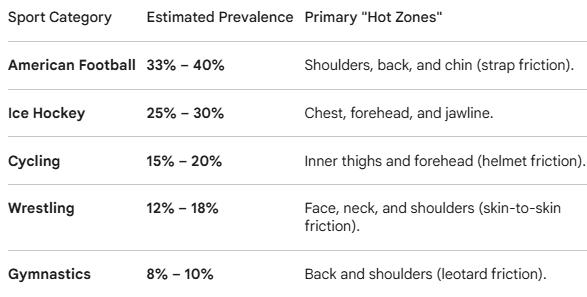
Fig: Risk of acne mechanica based on sports category

What is Fungal Acne?

Fungal acne, also known as pityrosporum folliculitis, is a skin condition where the hair follicle becomes infected due to an overgrowth of a yeast called Malassezia—for example, microscopic tears while shaving can allow yeast to enter the follicle, leading to infection. 

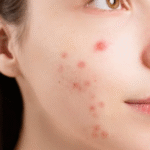
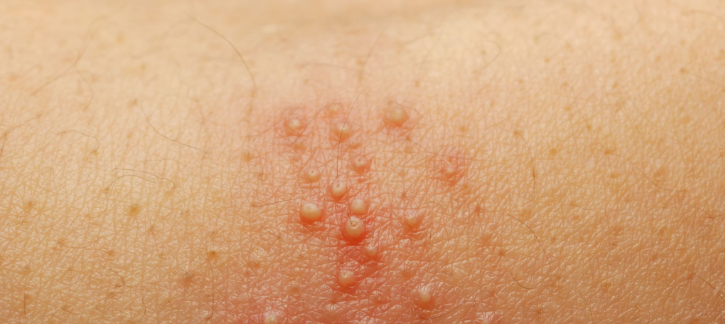
Fungal acne looks like a rash with clustered bumps, and they are itchy. Changes in your skincare and hygiene can help you deal with fungal acne.

fungal acne
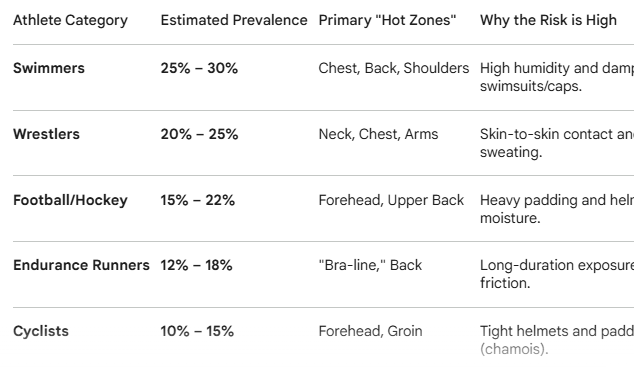
fungal acne stats

Fig: Stats showing risk of fungal acne based on sports category

Root Cause: 

  • The Malassezia yeast is lipophilic and feeds on oils (lipids), especially long-chain fatty acids found in animals (skin oil)/plants. 
  • It thrives in humid, moist, and warm climates. 
  • Hyperhidrosis creates an ideal environment for yeast growth.
  • Wearing tight clothes can trap the sweat 
  • Oily skin provides a warm environment for yeast production.
  • Avoid using heavy skincare/makeup; make sure you double cleanse your face by using a gentle antifungal cleanser. 
  • Avoid oral antibiotics; they can worsen the fungal issues.

Which Ingredients to Avoid for Malassezia Yeast Growth?

  • Avoid consuming natural oils like coconut oil, butter, ghee, soybean oil, almond oil, olive oil, etc.
  • Avoid ingredients with oleate, stearate, linoleate, myristate, or palmitate.
  • Avoid food ingredients containing polysorbate 20, 60, and 80 and fermented ingredients like galactomyces and certain yeast extracts.
ingredients

What Is the Difference Between Bacterial Acne and Fungal Acne?

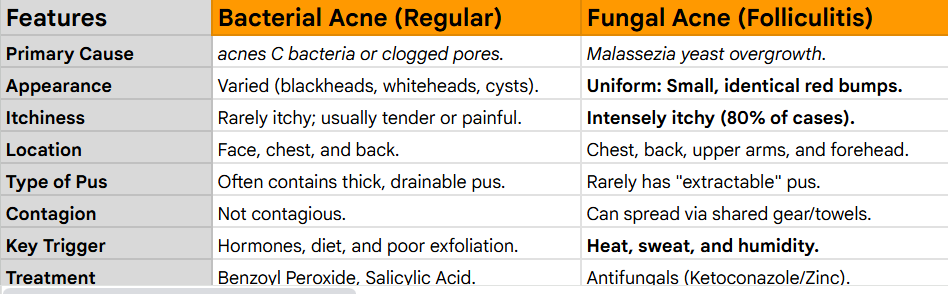
bacterial acne vs fungal acne

Fig: Bacterial Acne vs Fungal Acne

What is the Treatment for Fungal Acne?

  • Use antifungal shampoos containing ingredients like ketoconazole 1% (nizoral), selenium sulfide 1% (selsun blue), pyrithione zinc (head & shoulders). 
  • Use antifungal creams containing clotrimazole 1% or miconazole 2%.
  • Use antifungal cleansers containing ingredients like pyrithione zinc or salicylic acid.
  • Use antifungal creams containing 2% ketoconazole and ciclopirox olamine cream.
  • You can take antifungal oral medicine moderately containing ingredients like fluconazole (2-4 weeks) and itraconazole (1-2 weeks).

Prevention for Fungal Acne 

  • Shower immediately after intense training or a workout. 
  • Wear loose, pure cotton, and breathable gym clothes; wash your sweaty gym clothes, and wear clean and dry clothes.
  • Avoid wearing synthetic gym clothes that rub against your skin.
  • Avoid using makeup on your fungal acne, or audit your makeup and skincare ingredients to avoid a fungal acne breakout. 
  • Avoid harsh scrubbing and using harsh cleansers. 
  • Avoid using oral antibiotics unless they are prescribed, and avoid using corticosteroid creams.

Now that we have discussed how to identify and differentiate between acne. Let us understand if your moisturizer is making a fungal acne breakout worse.  

Is Your Moisturizer Making Fungal Acne Worse?

If you are suffering from any of these types of acne, first inspect the type of acne, check its appearance, and determine the reasons behind the acne. And check if your moisturizer is making the fungal acne worse. Moisturizers usually contain oils and keep the face hydrated; they create a perfect environment for fungal acne to thrive and grow. Avoid using any oily, heavy moisturizer; instead, use OTC antifungal creams to avoid spreading and switch to antifungal skincare for treating fungal acne. 

moisturizer

Final Words: 

Dealing with acne can be hard and painful. You would not even want to click pictures and post them on social platforms. As athletes or sports personalities, you are expected to be photo-ready all the time. The amount of pressure athletes carry to look perfect all the time can be exhausting; it’s better to be cautious and maintain a hygiene and skincare routine to prevent breakouts. 

I hope this article helps you in understanding the difference between gym and fungal acne. We also covered bacterial acne for better understanding. Make sure you follow proper guidelines when dealing with gym acne or fungal acne. If you liked our articles, do share them with colleagues and friends. Stay tuned to read more such informative articles, and do check out the previous article on anti-tan remedies for athletes and the best sunscreens for athletes

Scroll to Top