

Bicycles used to be a means of transport back then. Even today, they are used, and they are equally popular as competitive sports. Since 2020, there has been a global surge in bicycle usage—1 billion+ people use bicycles for transport, while 150-200 million participate in competitive sports globally.
Cycling is excellent for cardiovascular health. However, one cannot escape the saddle sores that come along with cycling. Research suggests that 40-60% of cyclists experience saddle sores regardless of whether they are professional racers or commuters. For athletes, skincare is not all about aesthetics—skin is the largest organ, your first line of defense against critical factors like bacteria, germs, and infections.
Additionally, athletes have to face constant discomfort from the sweat and friction. Moreover, heat & moisture get trapped, giving rashes and sores on your body. Worry not, we have got you covered. In this article, we will discuss ways to prevent saddle sores and an effective way to treat them.
What are Saddle Sores?
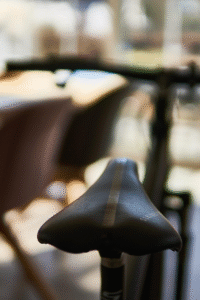
Saddle sores are caused by constant friction and pressure against the saddle. When the skin barrier is disturbed, sweat and bacteria flourish, creating painful, itchy, and fluid-filled bumps. This can significantly hinder an athlete’s performance.
Data Insights: A meta-analysis of studies from MEDLINE, EMBASE, and Web of Science databases. They made specific observations related to dermatological conditions that affect the saddle area.
Result: Out of 17 studies taken into consideration, 13 studies focused on male, whereas 2 studies focused on female saddle issues. Indicating that saddle issues are more frequently reported in male cyclists.
Common issues fall under saddle sores:
- Folliculitis: Sore butt due to constant sitting on the bicycle seat around the hair.
- Chafing: Scraps/constant friction on the inner thigh.
- Numbness: Compression-related loss of sensation around the butt and genitals.
How to Treat Saddle Sores?

Saddle sores are quite painful. If you are experiencing them occasionally, then make sure you take a rest. Avoid riding a bicycle for a few days to heal the inflammation.
Avoid wearing any tight clothes. If the skin barrier is broken, then clean the infection with gentle soap and apply an antibiotic cream like Emgel (erythromycin) or a steroid cream like hydrocortisone cream.
Note: If the sore contains pus, then avoid hydrocortisone cream because it can worsen the sore. Instead, use antibiotic treatment, either cream or oral medicine.
If your skin has chafed, then clean the area with soap and water and apply anti-chafing cream. Allow your skin to breathe and avoid wearing any tight clothing.
If the infection persists, then get it checked with a dermatologist.
How to Prevent Saddle Sores?

- Avoid tight clothes.
- Wear skin-friendly & breathable clothes, and keep your gear and cycling shorts clean and sanitized.
- Take good care of your skin; if your skin barrier is damaged, it will be difficult to manage in a changing climate and humidity.
- Avoid hot or cold wax if you have sores, as it further disrupts the skin barrier.
- Cleanse the affected area with soap(avoid harsh cleansers) and antibiotic cream.
- You can use hydrocolloid bandages (such as BAND-AID® Brand Hydro Seal) to prevent saddle sores.
- Whether you ensure your sitting posture, and the pressure you put on is correct or not (if you’re cycling upward, then the pressure will be on the hip area. If you are cycling forward direction, then the pressure will be on the perineum). And the saddle’s condition, height, material, angle, etc.
- Use an anti-chafing cream to reduce friction and protect your skin.
- Your post-ride habits should be followed closely; remove sweaty clothes immediately, shower with a gentle cleanser, and avoid reusing dirty gear.
How to Deal with Saddle Sores as a New Cyclist?

As a new cyclist, it can be exciting to learn and train in cycling. Before all that, there are a few things you need to know and follow. It will take some time for your skin and sit bones to adapt to pressure.
Avoid sitting too much on the cycle; take breaks for a while until you get the hang of sitting and riding for long hours. Use comfortable cycling bib shorts that are breathable and do not trap heat or sweat.
Before you buy a bicycle, check if the saddle is comfortable, the material, angle, height, etc. Try checking multiple saddles before purchasing.
You also need to know that chamois pads are gender-specific.
For women, in terms of shape, you only have one option.
For men, there are two options: one shape and a split shape.
The split shape relieves the pressure on soft tissue, and one shape provides comfortable support everywhere. Make sure the chamois pads are worn directly onto the skin without any undergarments. Otherwise, the extra fabric causes friction and traps bacteria.
How to Deal With Saddle Sores as an Experienced Cyclist?

You might have experience with riding, training, travelling, or sitting on a saddle for long hours as an experienced cyclist.
Check the saddle’s condition and change it if necessary. Check if your saddle is worn out or if your bib shorts have thinning seams. To prevent saddle sores, you can use hydrocolloid bandages such as BAND-AID® brand hydro seal for hygiene purposes.
Additionally, you also need to take care of the skin barrier. It protects you against harmful infection, sweat, friction, etc. Use products containing the following ingredients to protect and strengthen the skin barrier:
- Ceramides: Replenish your skin cells.
- Panthenol (Provitamin B5): Soothes and hydrates.
- Niacinamide: Reduces inflammation/acne.
- Squalane: A non-comedogenic moisturizer that nourishes skin.
Also, try giving rest to your body and skin for it to heal and repair itself quickly.
How to Deal With Saddle Sore on a Racing Day?
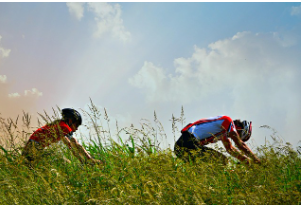
On racing day, the pressure of winning itself can be nerve-racking. On top of that, saddle sores can be a tough situation to deal with for an athlete. Apply hydrocortisone cream a few times to deal with small sores. Or you can use anesthetic ointment to numb the pain. However, prioritize rest immediately after the race. Ignoring a chronic sore can lead to a cyst, which may require surgical removal.
Final Words:
Cycling is one of the best activities for fitness and active lifestyle lovers. Though it is fun and good for health, it can hamper the skin barrier with dust, sun damage, redness, saddle sores, chafing rashes, tan, etc. We have covered all you need to know to deal with saddle sores in this article.
If you like our articles, do share them with colleagues and friends, and keep supporting us in our journey. You also go through other articles on our website.
Related Articles: