
High-Altitude Detanning: Professional Treatments for “Mountain Face”
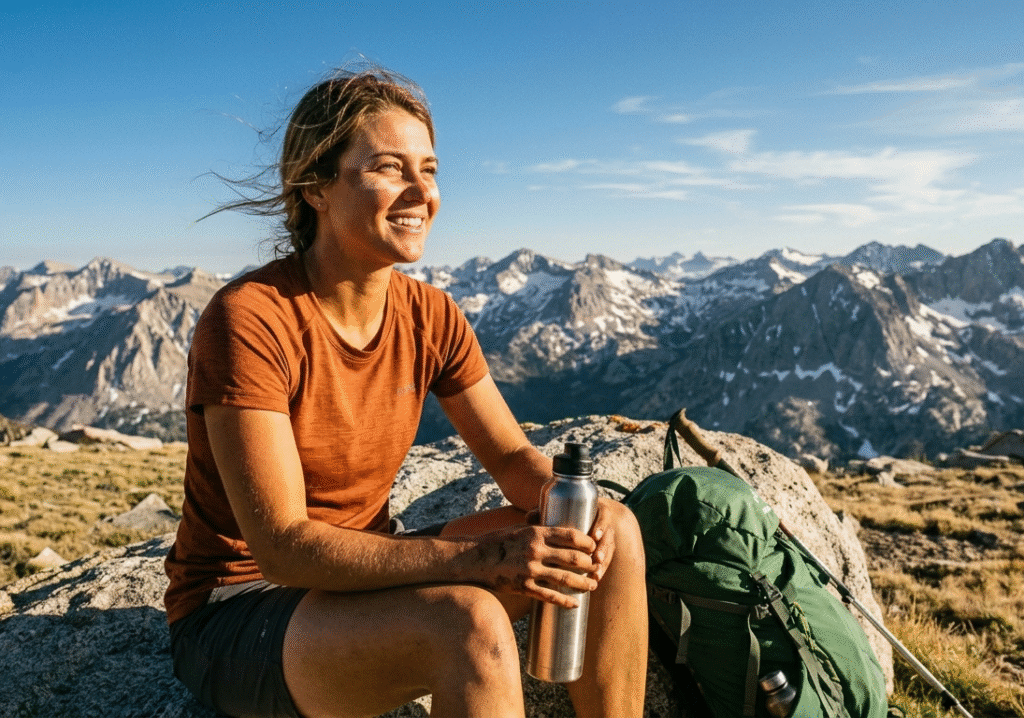
A high-altitude tan is unlike a typical suntan. High-altitude UV exposure is not only damaging to skin cells but also causes significant, deep hyperpigmentation.
Tan removal treatment is a highly sought-after treatment, especially for those dealing with high-altitude or vacation tans. Though high-altitude tan is way different from beach tan, it can still be effectively treated by following the professional recommendations outlined in this article.
Studies show that the population at high altitude exhibits a higher chance of tanning and skin conditions compared to those at sea level. The picture below shows the pigmentation and skin conditions that people deal with at high altitudes.
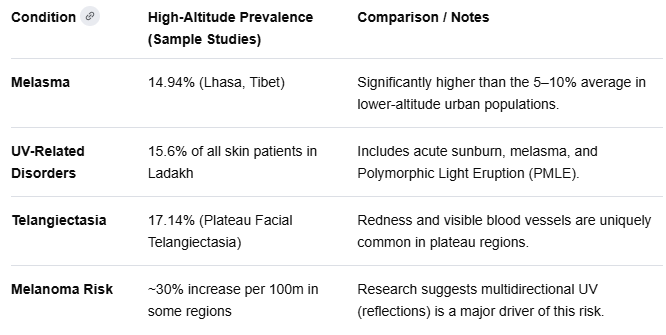
Fig: Prevalence of pigmentation disorders at high altitude
Why is High Altitude Tan Different from the Other Tans?
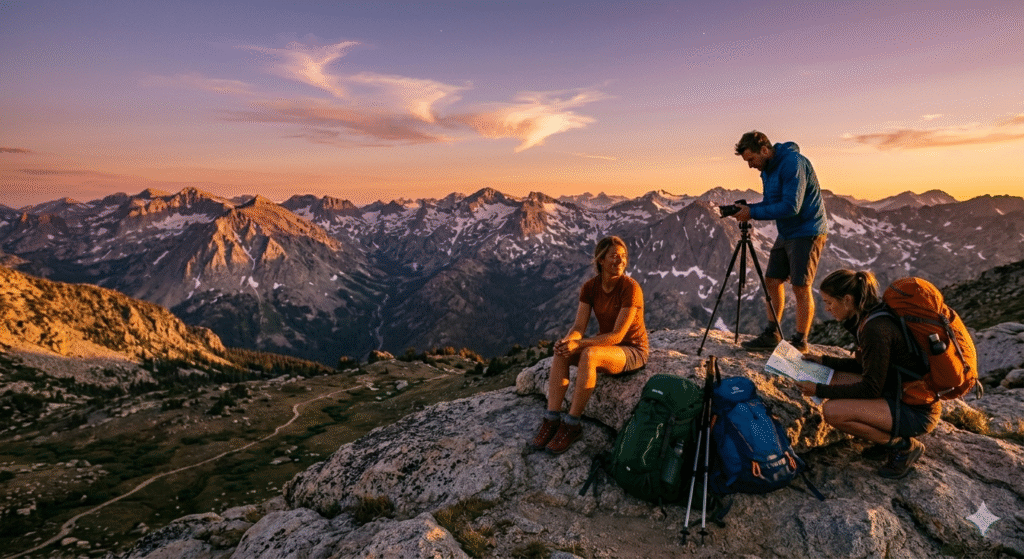
The temperature and the environmental conditions at high elevations make tanning more aggressive and challenging. You are exposed to an additional 10-20% of UV radiation for every 1000m; furthermore, snow directly reflect upto 80% of the UV radiation– a phenomenon known as the albedo effect. It reflects on two areas that dont get sunlight often— under the chin, inside the nostrils, etc.
The intense UV exposure can have effects:
- Immediate Effect: Sunburn & inflammation occur quickly; UV radiation can damage cellular DNA, in extreme cases, leading to skin cancer.
- Skin Pigmentation: To protect your skin from harsh sunrays, your body produces melanin. An increase in melanin leads to tanning, sunspots, and hyperpigmentation.
- Long-Term Sun Exposure: This can lead to photoaging (wrinkles, loss of elasticity) and increases the risk of skin cancer.
Why Choose Professional Tan Removal Treatment?
While many DIY home remedies fail to work on severely tanned skin, medical-grade treatments are highly recommended as follows:
Note: Once you are back from the mountains, you need to give your skin a bit of a break to adapt to the change in climate and weather. Then you can opt for professional treatments, which can help you deal with tan or hyperpigmentation.
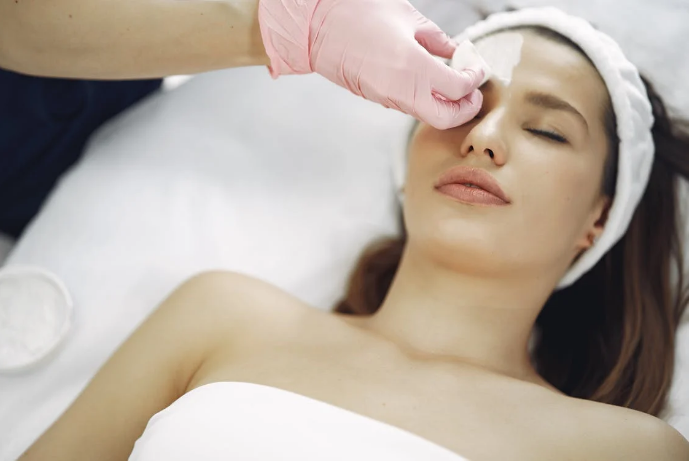
- Deep layers: Professional treatments reach deeper layers of the skin, whereas homemade remedies work on the surface layer of the skin.
- Faster Results: Noticeable improvements seen within 1-2 sessions.
- Customization: These procedures are curated by a dermatologist based on your skin needs.
- Additional Benefits: These procedures can clear your skin, improve collagen, and provide a healthy glow.
Note: The global hyperpigmentation treatment market is expected to reach approximately $993.9 Million by 2030.
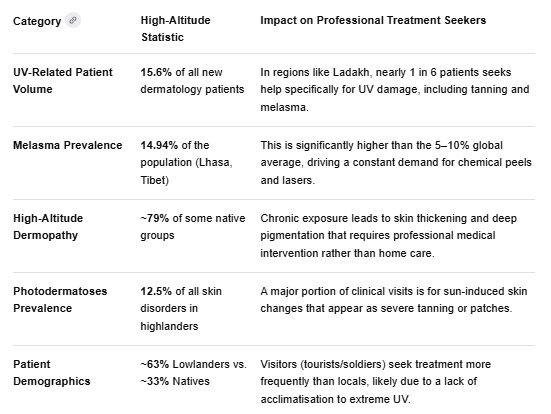
Fig: Demand for Clinical Procedures to Treat High Altitude, Skin Tan
Best Professional Treatments for Dealing with High Altitude Tan
Disclaimer! This guide is for informational purposes (from my journey). Always consult a dermatologist before undergoing professional treatments.
Chemical Peels
They use acid solutions to remove the dead/outer layer of the skin, revealing fresh, soft, glowing, evenly pigmented skin. Chemical peels are the most preferred procedures, mostly for aesthetic purposes. Approximately 75.5% to 80% of patients report high satisfaction and visible brightness post-treatment.
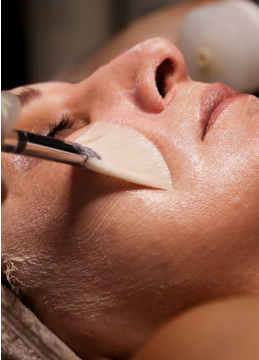
VI Peel (Precision Plus)
It is a popular medium-depth chemical peel used to fight against acne marks, hyperpigmentation, fine lines, tan, and sun damage.
Key ingredients: TCA, Retinoic Acid, Salicylic Acid, Phenol, Vitamin C
Results: 59% of hyperpigmentation is reduced, and 70% of skin tone improvement.
Recommended Session: 3-6 sessions
Timeline: It will take 7 days for a clear complexion and 4-6 weeks for collagen-based results.
Comparison: VI Peel vs Traditional Peels
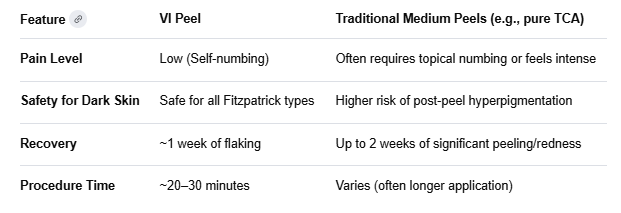
Fig: VI peels vs Traditional peels
Obagi Blue Peel Radiance:
It is a professional-grade radiance version peel used for instant radiance, improving texture, and treating hyperpigmentation.
Key Ingredients: 20% Salicylic Acid, 2% Glycolic Acid, 2% Lactic Acid.
Results: 60-70% of hyperpigmentation is reduced.
Recommended Sessions: 4-6 sessions
Timeline: 1-3 days of mild flaking, and it takes 7-10 days for a brighter complexion.
Comparison: Obagi Radiance vs. VI Peel
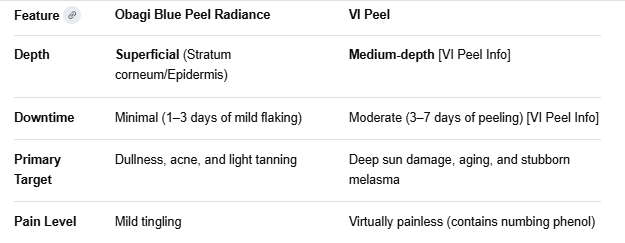
Fig: Obagi Radiance vs VI Peel
Melanopro Peel:
It is a two-phased effective treatment specifically designed to treat stubborn hyperpigmentation and melasma.
Key Ingredients: Azelaic, Glycolic, Lactic, Salicylic, Tranexamic Acid, and Retinol.
Results: 14.4% reduction in hyperpigmentation, 9.7% reduction in dark spots, 28.6% increased in skin brightness, 35.1% reduction in dullness, 9.8% improvement in skin tone, 13–14%, leading to smoother skin.
Recommended Sessions: 1 complete cycle. It is a 6-week program with 2 phases.
- Phase 1(In-clinic)– It is an intensive peeling mask, remove it at home after 3-7 hours, depending on skin sensitivity.
- Phase 2(At home)– It is a 6-week program using continuous resurfacing cream and ultracalming mist to maintain exfoliation and suppress future hyperpigmentation.
Timeline: 7-10 days of skin flaking. You will slowly start seeing a glowing, brightening, and clearer skin.
Comparison: Melanopro Peel System vs Obagi Blue Peel Radiance
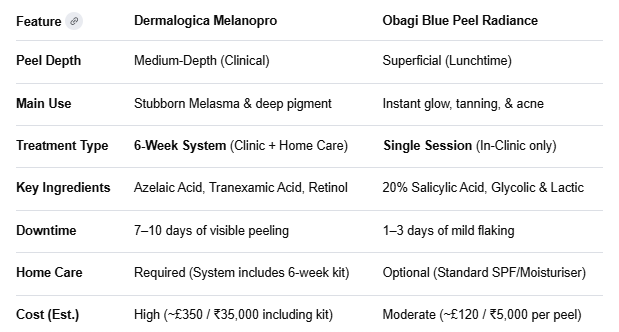
Fig: Melanopro Peel System vs Obagi Blue Peel Radiance
Clear & Bright Peel:
It is a professional-grade chemical treatment designed to polish uneven skin tone, acne, and hyperpigmentation. It uses a blend of Alpha Hydroxy Acids (AHA) and Lipophilic AHAs.
Key Ingredients: Glycolic and Lactic Acid (AHA), Mandelic Acid (Lipophilic AHA), Radiance Boost.
Results: 40-60% hyperpigmentation
Recommended Sessions: 3-6 sessions, 2-4 weeks apart.
Timeline: 3-5 days of skin flaking. Visible results after 1 session
Comparison: Professional clear and bright peel v/s At home AHA solutions
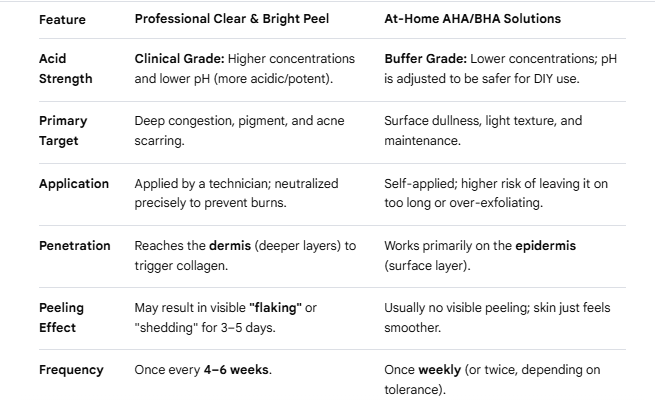
Fig: Professional clear and bright peel v/s At home AHA/BHA solutions
Professional Medi Facials:
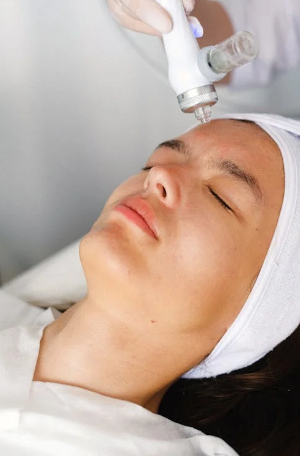
A high-altitude tan cannot be treated with a usual facial; it needs an effective professional-grade medi-facial. These treatments use medical-grade technology that infuses hydration and breaks down hyperpigmentation.
The Hydra Medi Facial is a gold-standard treatment for providing ultimate hydration to deal with high-elevation skin. And there are other rest facials mentioned in the table below.
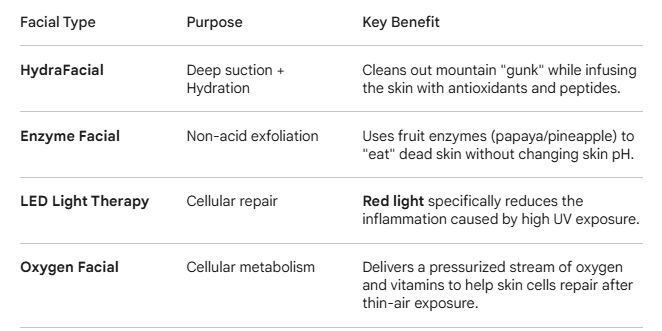
Fig: Professional Medical Facials
My Step-by-Step Journey– Action Plan Guide
Phase 1: Prep
Before I head to a high-altitude place, I make sure to hydrate my skin and body (by drinking a lot of water rich in electrolytes). Prepping your skin is important—I use a gel-based moisturizer, then apply Extreme Nomad face sunscreen stick, apply anti-aging cream, and top it up with shea butter on face and lips.
Note: Avoid applying retinoids and strong exfoliants during the day.
Phase 2: Protection
I make sure to apply a generous amount of sunscreen every 30 minutes. I also cover myself with shades, caps, and sun-protective clothing. Also, I use coconut oil to protect and heal my skin from sunburn at night.
Phase 3: Aftercare (Healing)
I keep using coconut oil to soften my skin and heal sunburn and windburn. Please do not use any harsh peeling acids or exfoliants. I give my skin time to heal and keep hydrating my skin.
Phase 4: Professional Care (De-Tanning)
Once my skin healed and adapted to the new environment, I got a hydra facial, which relaxes my skin and removes any gunk. After 3 weeks, I got 2 sessions of VI peel to deal with intense tan. Additionally, I strictly follow post-treatment protocols, such as gentle cleansing, moisturizing, and sunscreen, and maintain proper hygiene.
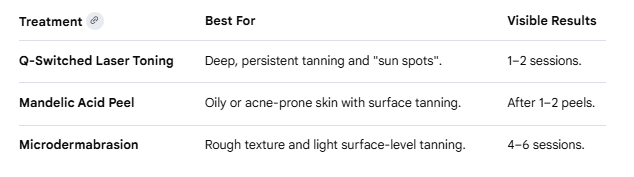
Other Alternative Professional Treatments
Conclusions:
A high-altitude tan is a stubborn tan, difficult to deal with, and can be a lot more damaging. When UV rays hit the skin, it causes direct DNA damage, so your body releases melanin pigment to absorb the rays. This will not only lead to cell damage but also promote photoaging, in severe cases, causing skin cancer.
For targeted issues like high-altitude hyperpigmentation, chemical peels are frequently used.
Facials are reparative—providing deep hydration and soothing windburn and sunburn. While chemical peels are corrective, they help in fading hyperpigmentation and uneven skin tone.
I hope this article helps. Share it with friends and colleagues. Stay tuned for such helpful articles. Support us by reading and sharing our articles. Comment down if you have any queries.
Related Articles: